Professional Experience
Instrument Engineer
Jan 2024 – Oct 2026
CSIRO
Australia’s National Science Agency
Design Engineer
May 2023 – Jan 2024
Axivity Ltd.
Technical Assistant
Apr 2023 – Sept 2023
Monash University
Materials Science and Engineering Dept.
Research Assistant/Design Engineer
Nov 2020 – Apr 2023
Monash University
Human-Centred Computing (HCC) Dept.
Education
2017 – 2022
Bachelor of Electrical and Computer Systems Engineering (Honours)
Monash University, Australia
Areas of Specialisation
Engineering design
Control systems
Industrial automation
Systems integration
Embedded systems
Testing and commissioning
Skills
Electronics and PCB design
CAD and mechanical design
PLC, HMI, SCADA
Microcontrollers
Sensors and data acquisition
Test and measurement
Motion control systems
Optical systems
Signal processing
Machine learning
Information theory
Regulatory compliance (ISO, IEC)
Languages
English (Native)
Mandarin (Proficient)
Bahasa Malay (Proficient)
Cantonese (Elementary)
CSIRO, AUSTRALIA’S NATIONAL SCIENCE AGENCY
JAN 2024 – OCT 2026
SCIENTIFIC AND INDUSTRIAL INSTRUMENTATION
Mineralogical and Elemental Analyser (MEA) Commercialisation for BHP Olympic Dam
The Mineralogical and Elemental Analyser combines X-ray fluorescence (XRF) and X-ray diffraction (XRD) to measure the elemental and mineral composition of process slurry simultaneously and in real time. BHP’s Olympic Dam operation was the first deployment of this generation of the MEA.
PLC and HMI development · Process automation · Systems integration · Fault detection and recovery · Self-diagnostics
Designed the control system architecture linking the instrument hardware, operator interface, and scientific software. Developed the PLC logic and HMI, integrating field instrumentation and interlocks with the scientific runtime responsible for data acquisition and processing.
Implemented automated operating sequences, instrument self-tests, and fault recovery logic to support safe operation with minimal operator intervention. Developed alarm handling at both the instrument and plant levels so operators could identify faults and monitor recovery.
CSIRO, AUSTRALIA’S NATIONAL SCIENCE AGENCY
JAN 2024 – OCT 2026
SCIENTIFIC AND INDUSTRIAL INSTRUMENTATION
MinEx CRC Downhole LIBS Assay Tool
The world’s largest mineral exploration collaboration, MinEx CRC brings together industry, government, and research organisations with funding from the Australian Government. Its downhole assay tool uses laser-induced breakdown spectroscopy (LIBS) to measure the elemental composition of rock inside a drill hole, giving drilling teams real-time data without waiting for rock cuttings to reach the surface.
PCB and electronics design · Closed-loop control · LiDAR and optical sensing · Fibre optics · Ruggedisation
Designed the closed-loop LiDAR autofocus system for the assay laser, including the custom electronics, PCB, and control algorithms. An onboard microcontroller processed the LiDAR scan geometry, using variable-width sampling windows and a confidence matrix to estimate and convert the distance to the rock surface into calibrated focus motor commands.
Designed and built a separate inspection tool that transmitted high-definition video over optical fibre, de-risking the project by allowing operators to assess downhole conditions from the surface before lowering the assay instrument. Provided engineering input on the winch system and its drive electronics.
CSIRO, AUSTRALIA’S NATIONAL SCIENCE AGENCY
JAN 2024 – OCT 2026
SCIENTIFIC AND INDUSTRIAL INSTRUMENTATION
Multimodal Mapping with LIBS, XRF, and Raman Spectroscopy
This research instrument was the first to integrate laser-induced breakdown spectroscopy (LIBS), X-ray fluorescence (XRF), and Raman spectroscopy. Researchers can compare elemental maps from LIBS and XRF with mineral identification from Raman to determine where an element is concentrated in a geological sample and which mineral phases are associated with it.
Optomechanics · Electronics design · Systems integration · Safety systems · Automation
Designed and built core instrument hardware, including optical mounts, sample holders, calibration tools, and control buffers for the laser. Developed a ruggedised spectrometer package for field deployment and contributed to the initial design of the instrument enclosure.
Managed two optics laboratories and designed a laser safety system around experimental workflows and regulatory requirements. In addition to safety interlocks, the system also controlled extraction and cooling, and logged environmental conditions alongside measurement and calibration data.
CSIRO, AUSTRALIA’S NATIONAL SCIENCE AGENCY
JAN 2024 – OCT 2026
SCIENTIFIC AND INDUSTRIAL INSTRUMENTATION
Maia Mapper
CSIRO’s Maia Mapper is a high-throughput X-ray fluorescence (XRF) imaging system that rapidly maps the distribution of elements across large geological samples. In-house developed 384-element X-ray detectors and FPGA-based electronics process measurements in real time as the instrument scans the sample.
X-ray instrumentation · Electronic and mechanical design · Systems integration · Instrument reliability · Radiation safety
Managed the development and assembly laboratories and worked with physicists on electronic and mechanical improvements to the instrument. Took over support for the custom detector and real-time processing electronics as experienced team members retired, carrying their diagnostic and operating knowledge into day-to-day support for researchers.
Served as the first point of contact for users of the Maia Mapper and the Maia Detector, and the primary engineering liaison for subsystem manufacturers. Supervised user experiments, diagnosed faults during research runs, and coordinated troubleshooting directly with engineers responsible for the affected subsystems. Scheduled preventative maintenance and kept critical spares ready to minimise downtime. Conducted radiation surveys and maintained standard operating procedures in line with ARPANSA requirements.
AXIVITY LTD.
MAY 2023 – JAN 2024
ENGINEERING DESIGN
Axivity AX3 Universal Wearable System
The Axivity AX3 is a wearable accelerometer used in clinical research and global health studies. Researchers needed a compact, adaptable mount so they could use the same sensor across applications ranging from infant activity monitoring to animal studies.
Human Factors Engineering · Wearable device design · Rapid prototyping · Design for manufacture (DFM) · Additive manufacturing
Led the redesign of the AX3 mounting system from requirements through production. Translated feedback from researchers worldwide into design requirements and refined the mount through successive prototypes, reducing its footprint by over 50%.
The mount was designed for injection moulding from the outset. Coordinated testing and manufacture with production partners, delivering over 5,000 units for international medical research.
MONASH UNIVERSITY – DEPT. OF MATERIALS SCIENCE AND ENGINEERING
APR 2023 – AUG 2023
SCIENTIFIC INSTRUMENTATION
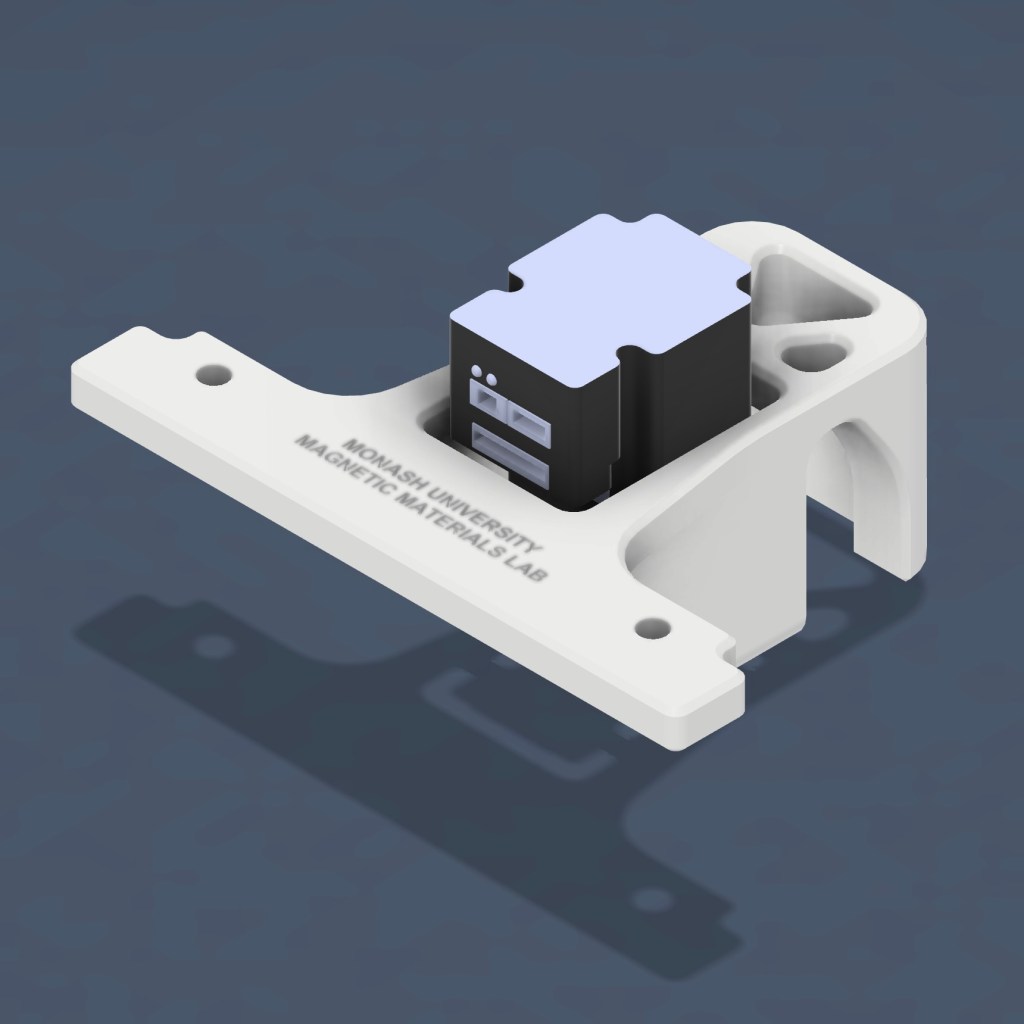
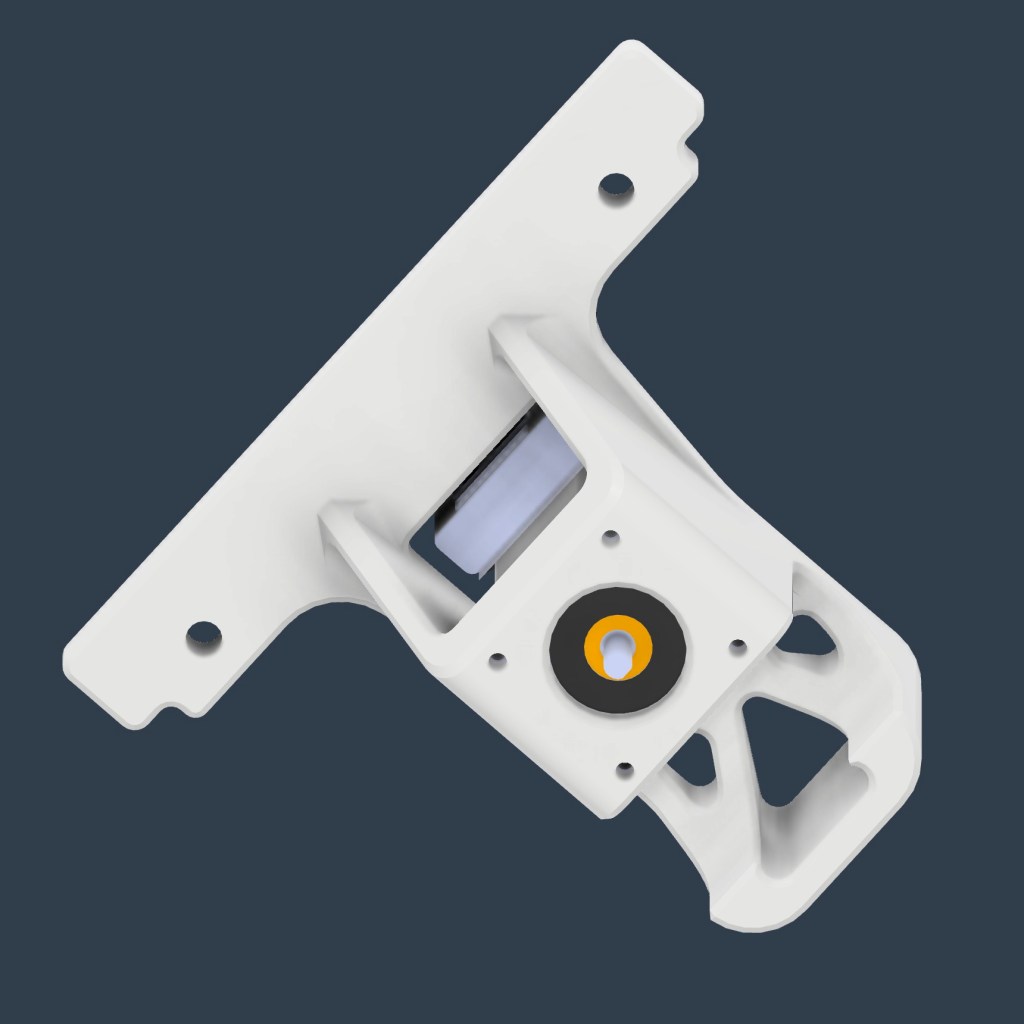
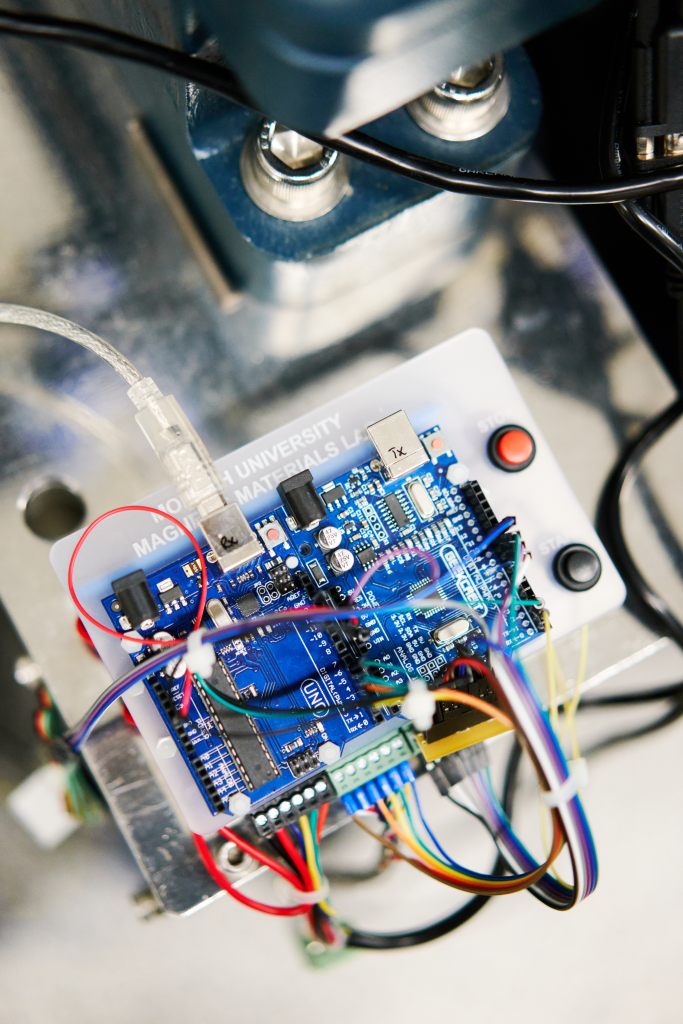
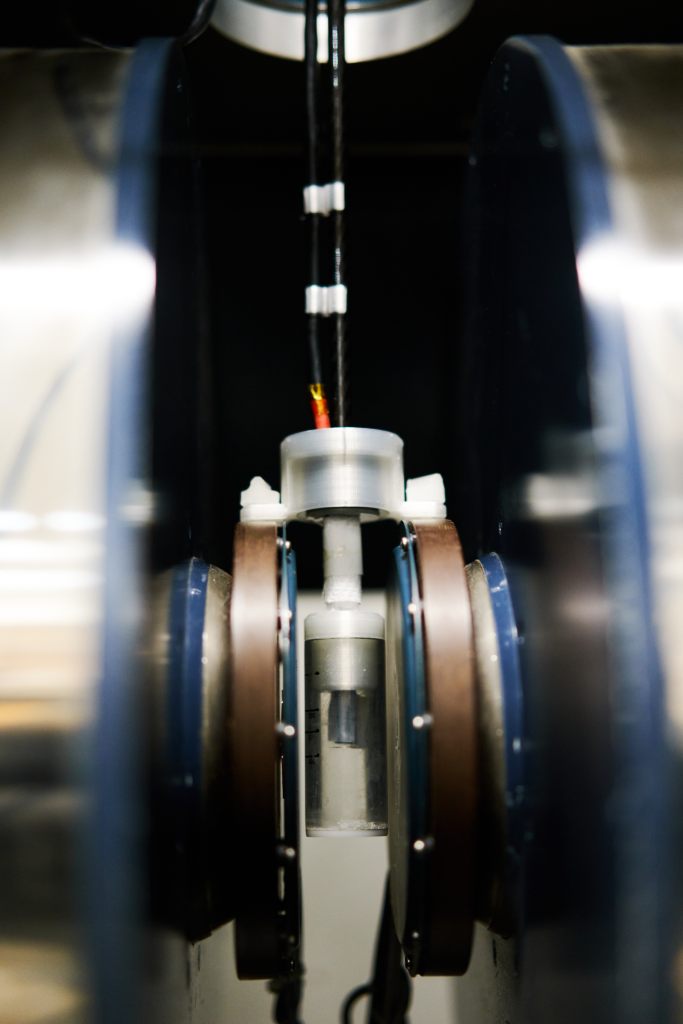
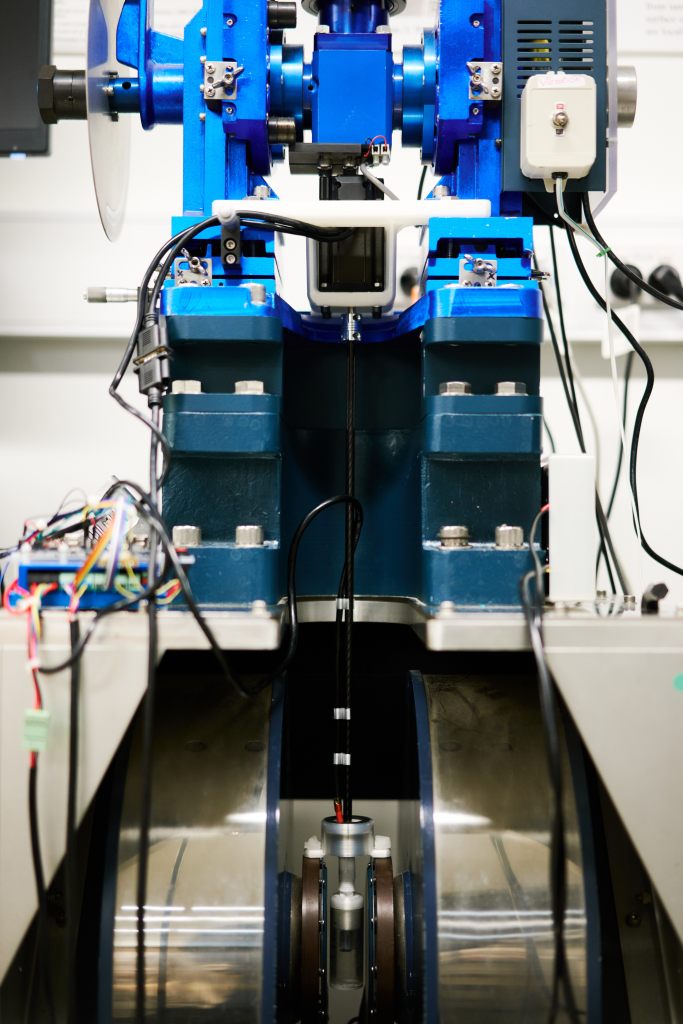
Automated Magnetostriction Measurement by Rotation
Researchers needed to measure how a magnetic sample changed length as it rotated relative to an applied magnetic field. Designed and built a removable rotation system that automated these measurements without permanently modifying the laboratory’s existing vibrating sample magnetometer (VSM).
Instrumentation design · Embedded systems · Closed-loop motion control · Data acquisition · Magnetic materials
Designed a stepper-driven rotation stage with a telescoping carbon-fibre sample holder to limit magnetic interference at the sample. Tuned a closed-loop PID controller for precise angular positioning. Two microcontrollers used interrupt-driven communication and finite-state logic to synchronise rotation with external measurement equipment and stream data to a PC for logging and analysis.
Handed the system over with operating procedures, data-processing instructions, version-controlled hardware and firmware, and spare parts so laboratory staff could run experiments and maintain the instrument independently.
MONASH UNIVERSITY – DEPT. OF MATERIALS SCIENCE AND ENGINEERING
APR 2023 – AUG 2023
SCIENTIFIC INSTRUMENTATION
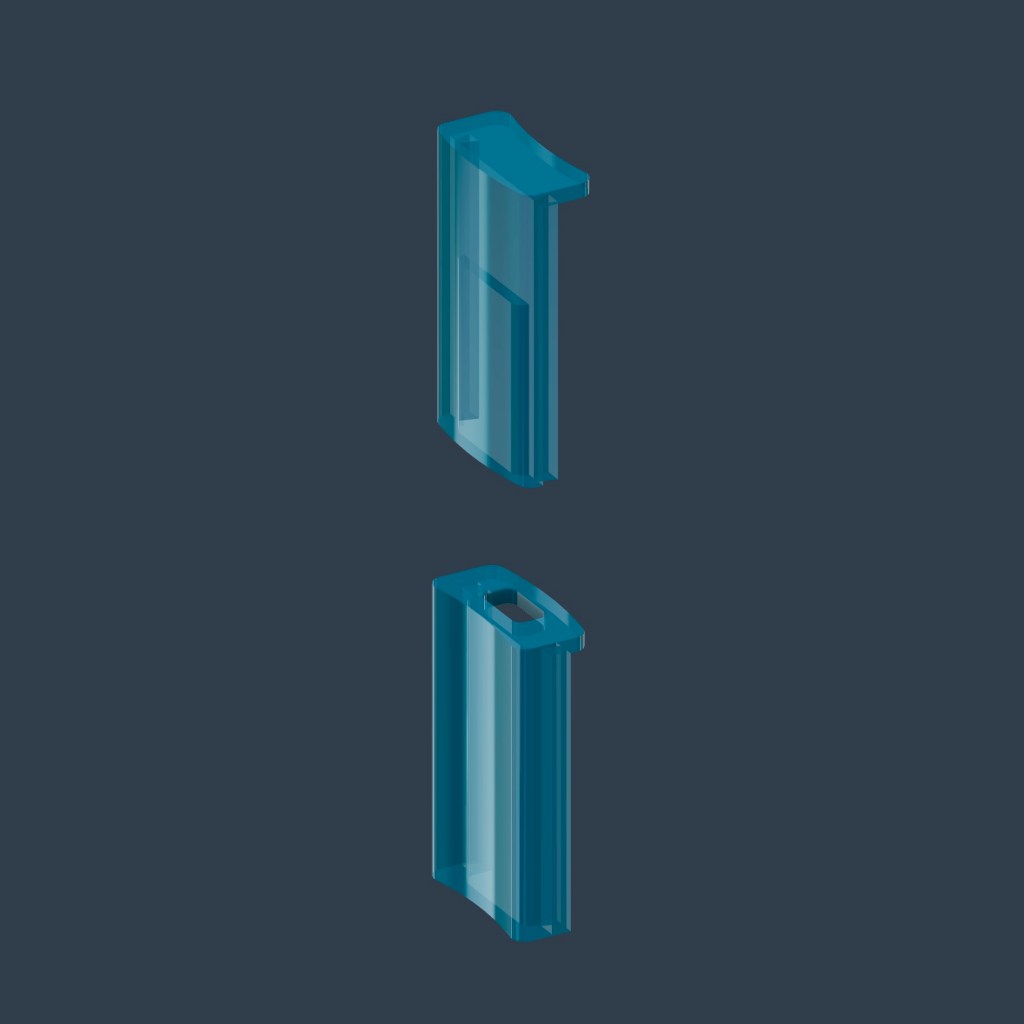
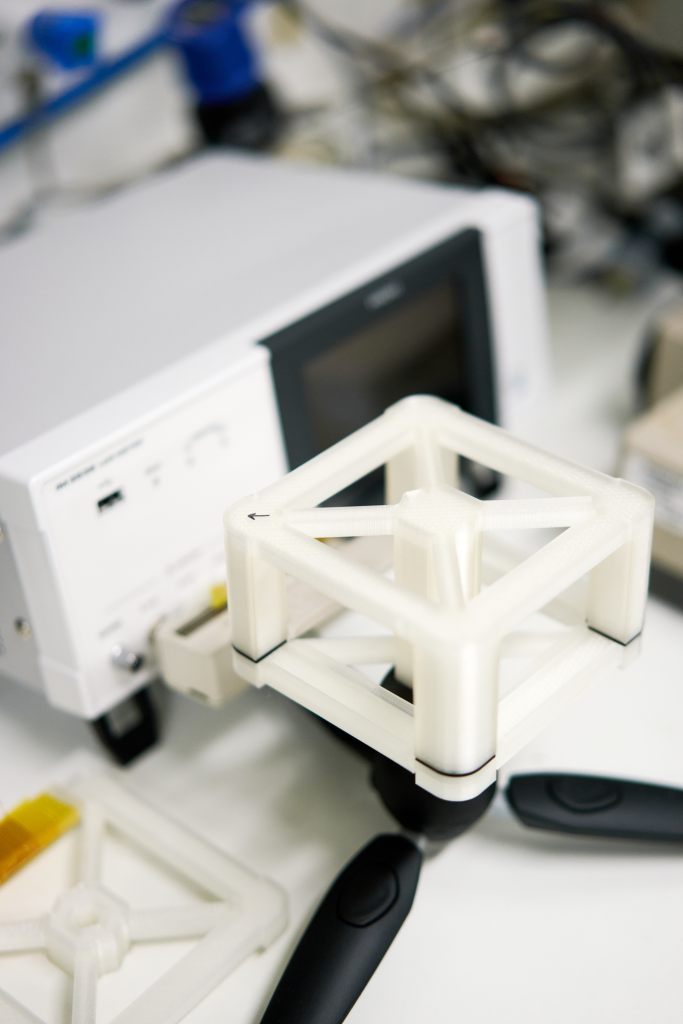
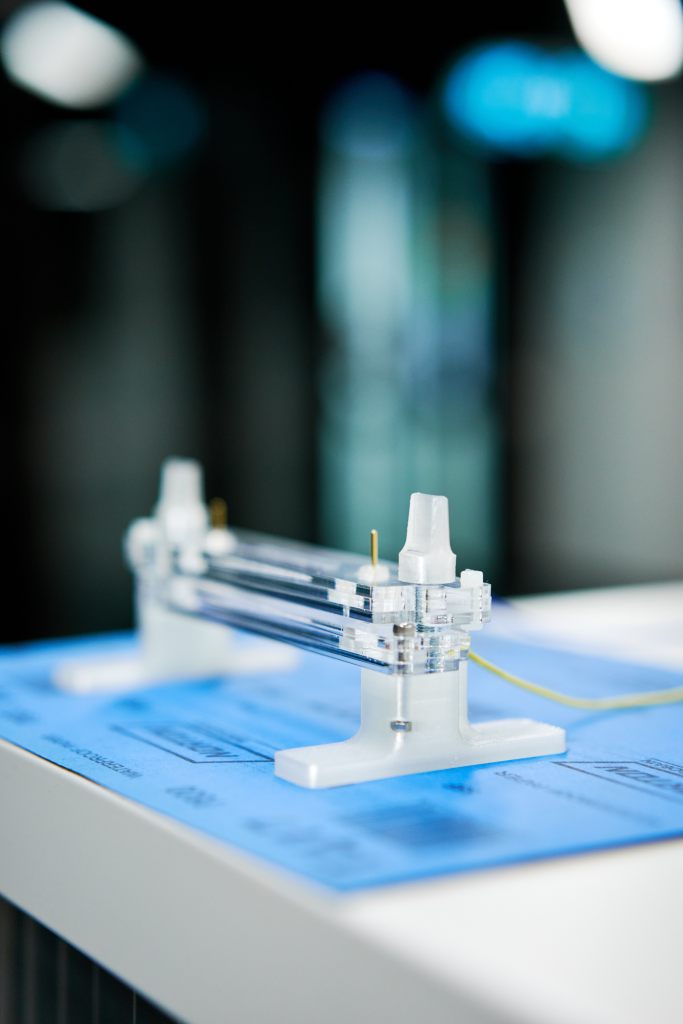
Electrical and Magnetic Characterisation of Fragile Ribbon Samples
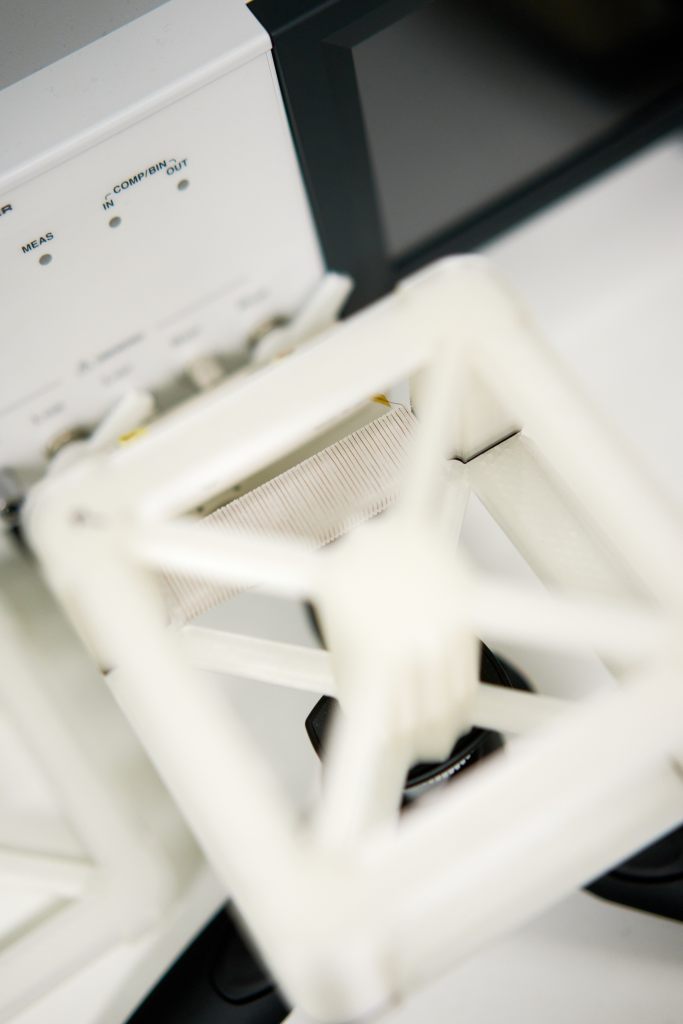
Designed and built two laboratory fixtures to measure the electrical resistance and magnetic properties of soft magnetic ribbons. Both had to position the samples consistently while protecting the fragile material during loading and testing.
Instrumentation design · Mechanical design · Design for assembly · Precision fabrication · Magnetic materials
Resistance measurement fixture. Designed a transparent, layered acrylic fixture with laser-etched guides so researchers could see and align each annealed ribbon before testing. Spring-loaded needle probes and custom copper electrodes provided repeatable electrical contact with an LCR meter while limiting stress on the sample.
Modular Epstein frame. Designed interchangeable FDM- and SLA-printed assemblies so researchers could reconfigure the frame for different experiments. Mirror-polished surfaces protected the ribbons, compliant contacts maintained consistent magnetic coupling, and multi-axis alignment features helped account for Earth’s magnetic field during measurement.
MONASH UNIVERSITY – DEPT. OF HUMAN-CENTRED COMPUTING (HCC)
DEC 2021 – FEB 2022
ENGINEERING DESIGN
United States National Institutes of Health:
Infant Wearable Sensor System
Contributed to paediatric brain development research at Monash University, in collaboration with the University of South Carolina as part of the United States National Institutes of Health (NIH) HEALthy Brain and Child Development (HBCD) Study.
Monash University collaborated with the University of South Carolina on wearable sensors for the HEALthy Brain and Child Development (HBCD) Study, a United States National Institutes of Health (NIH) research program examining early brain development.
Clinical device design · Anthropometry · Compliance (US CPSC) · Design for manufacture (DFM) · Additive manufacturing
Designed infant sensor enclosures using region-specific anthropometric data to optimise fit, in compliance with US consumer product safety requirements. Coordinated production and quality requirements with external manufacturers and delivered over 600 units through additive manufacturing.
MONASH UNIVERSITY – DEPT. OF HUMAN-CENTRED COMPUTING (HCC)
NOV 2020 – APR 2023
EXPERIMENTAL SYSTEMS
Interactive Systems for Human-Computer Interaction (HCI) Research
Developed research hardware that let people interact with food, games, and virtual environments through touch, sound, and movement. The work ranged from experimental prototypes to demonstrator systems built for public use.
Embedded systems · Sensor integration · Actuation · Wearable device design · Experimental prototyping
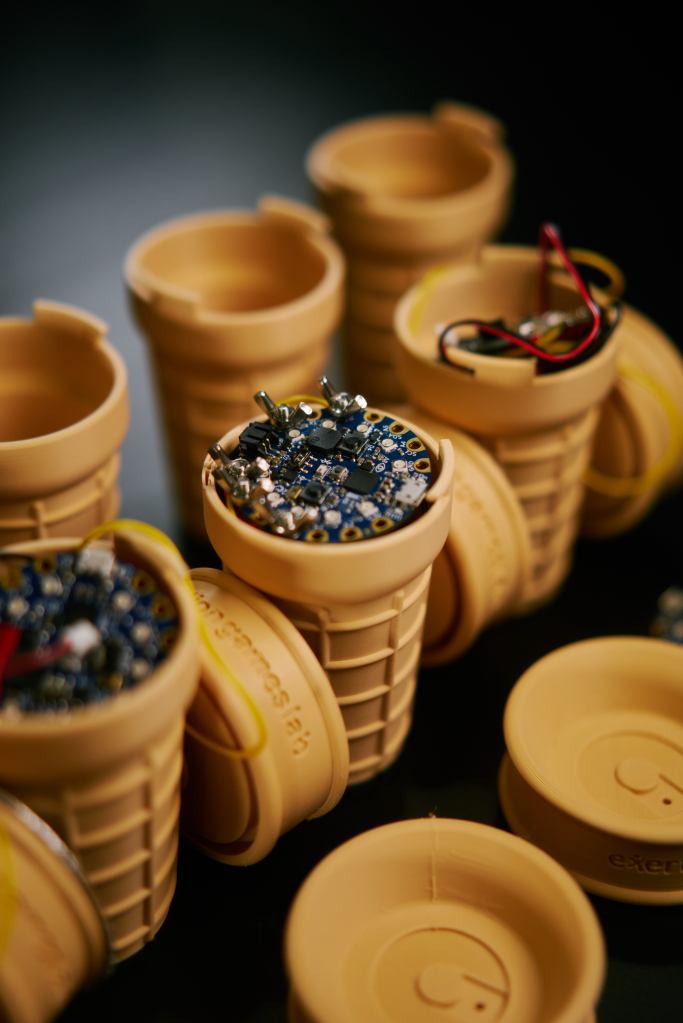
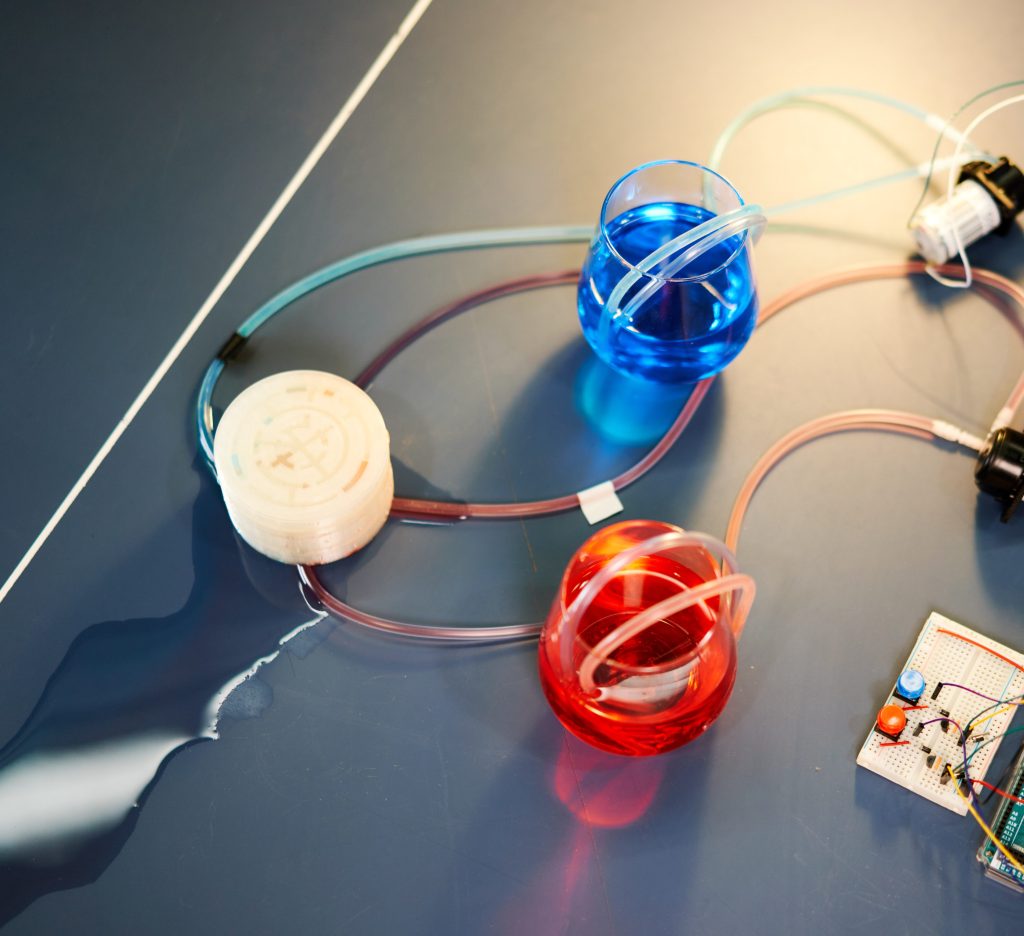
SoundScoop and Logic Bonbon explored how food responds to interaction. Led hardware development for SoundScoop, designed a capacitive sensing system that triggered sound as users ate, and manufactured 30 food-safe, water-resistant units used in public demonstrations. For Logic Bonbon, designed fluidic logic gates that controlled flavour delivery within an edible structure and developed the moulds and fabrication process to produce edible, working prototypes.
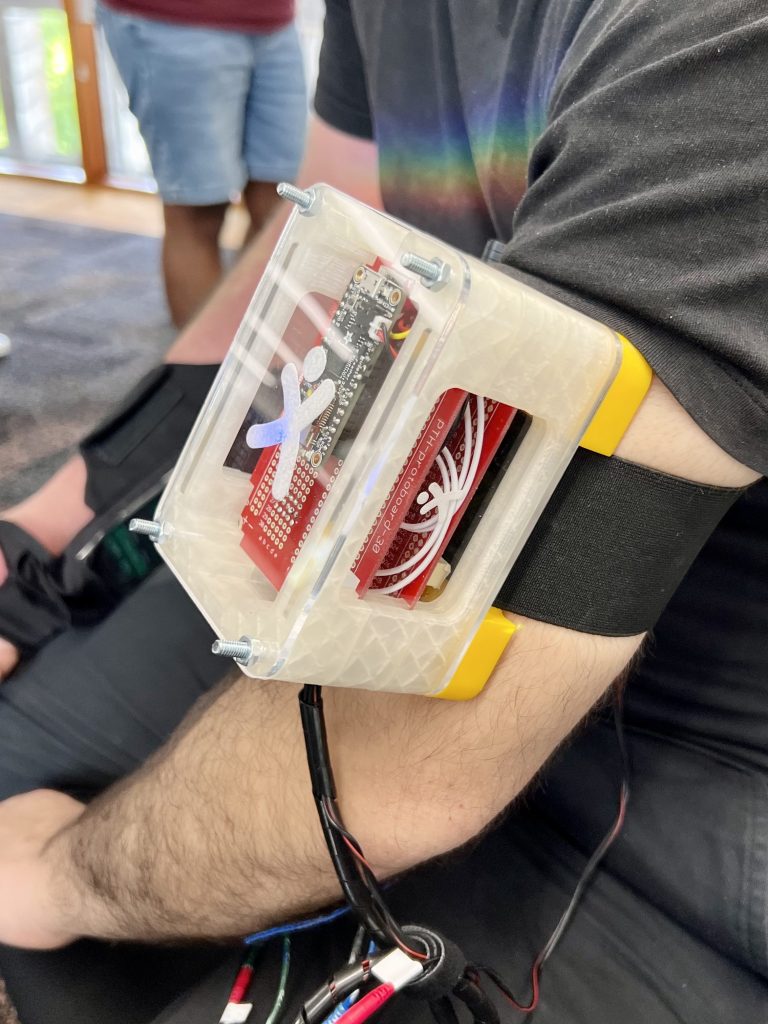
Fluito and Auto-Paizo Games explored physical feedback in games. Designed a low-latency wireless controller and analogue pump drivers for Fluito, synchronising water movement in a floatation tank with events in a virtual reality environment. For Wearable EMS, integrated a programmable electrical muscle stimulation device into a wearable prototype that actuated hand movements during gameplay.
GazeAway and Edible Supercapacitor explored two experimental interfaces. Contributed to GazeAway’s early hardware prototypes, integrating eye tracking with a servo-actuated display for research into gaze aversion during memory recall. For Edible Supercapacitor, designed and tested food-based electrical prototypes and developed control software to characterise their discharge behaviour.
Click on a project title to read the research paper.
PERSONAL PROJECT
SEP 2022 – DEC 2022
ENGINEERING DESIGN
Focus-Synchronised Anamorphic Capture System
A dual-focus anamorphic setup requires the camera lens and anamorphic attachment to focus at the same distance. An electronic control system that synchronised both mechanisms would allow the operator to adjust focus with a single control on set, making dual-focus systems actually feasible for real world use.
Optomechanics · Closed-loop control · Rangefinding · Servo actuation · Mechanical design
Explored mechanical linkages and decided on electronic synchronisation for its flexibility across lens configurations and ease of adjustment on set. Designed custom lens helicoids and gearing, using servo actuation and encoder feedback to coordinate the two focus mechanisms.
Integrated time-of-flight and ultrasonic rangefinding to assist manual focus pulling and enable basic autofocus on subjects at the centre of the frame.
MONASH UNIVERSITY – UNDERGRADUATE HONOURS THESIS
JUL 2021 – JUL 2022
MACHINE LEARNING AND SIGNAL PROCESSING
Decoding Digital Data Stored in Synthetic DNA with Machine Learning
Synthetic DNA can store digital information at high density, but noise in the sequencing process can introduce errors when the data is read back. This project investigated whether a neural network could recover the original data more accurately under noisy sequencing conditions.
Machine learning · Signal processing · Information theory · Experimental design · Data analysis · MATLAB
Implemented basecaller models to generate training and test datasets, then designed and trained a neural network to decode the stored data. Benchmarked the network against previously published decoding methods and achieved higher decoding accuracy under the conditions tested.
Tools
Mechanical
SolidWorks
Autodesk Fusion
Autodesk AutoCAD
Siemens Solid Edge
Electronics
KiCad
LTspice
Altium Designer
Fabrication
FDM, SLA, MJF
Laser cutting
Data
MATLAB
Simulink
Software
C/C++
Python
Structured Text (ST)
Galil Motion Control
Documentation
LaTeX